December 31st, 2012 · 2 Comments
“The problem with leading Indians is you are never quite sure if they are following or chasing you.” – Craig Johnson, Death Without Company
Some of you may recognize Mr. Johnson, the author of a series of books about the fictional exploits of a Wyoming sheriff. The series spawned the excellent television show “Longmire” which will no doubt be cancelled soon if it has not been 86ed already. I say this because the Sporting Wife and I like it about equally well, and that is the kiss of death for any program.
I chose this quote for the first post after a long absence because it describes how I feel about life at the moment. I’m trying to stay ahead of my professional and family obligations while still finding time for my hobbies and interests, and I have decided that the Indians I was once leading are now chasing me. There’s nothing for it but to keep running and hope I wind up somewhere great. Look for new posts, and I will also try to finish some of the old installment articles.
Tags: Words of Wisdom
February 22nd, 2012 · 5 Comments
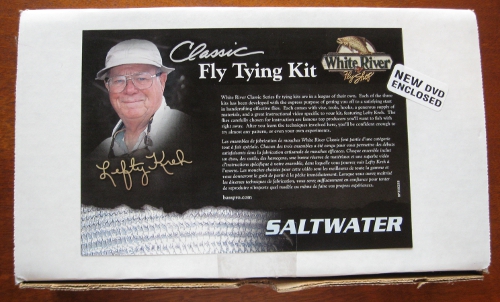
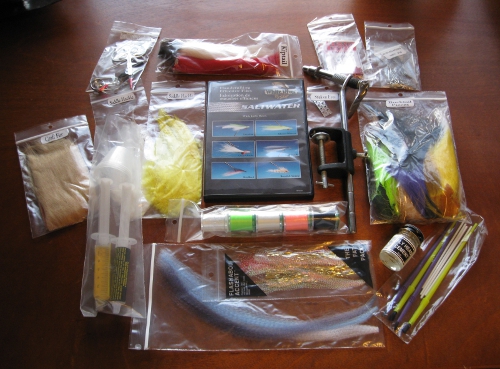
Looking at the smallish box does not give you a fair idea of the tools and fly tying materials inside. From my limited experience, the only thing missing is a whip finisher. I haven’t watched the DVD or tied any flies with this kit yet, but I wanted you to get a look at the contents before I post some of my results. Look for the second part of this review when I get time to sit down at the bench for a few minutes. While you wait, try to come up with some humorous comments based on one item, head cement.
Tags: Fly Fishing
January 14th, 2012 · 1 Comment
Those of you who read the last “Words of Wisdom” and did not sleep through high school English will no doubt notice the foreshadowing of this review. Lest you should be surprised by the appearance of such a sophisticated literary device, bear in mind the many times I have told you there is nothing short about this operation. – Ed.
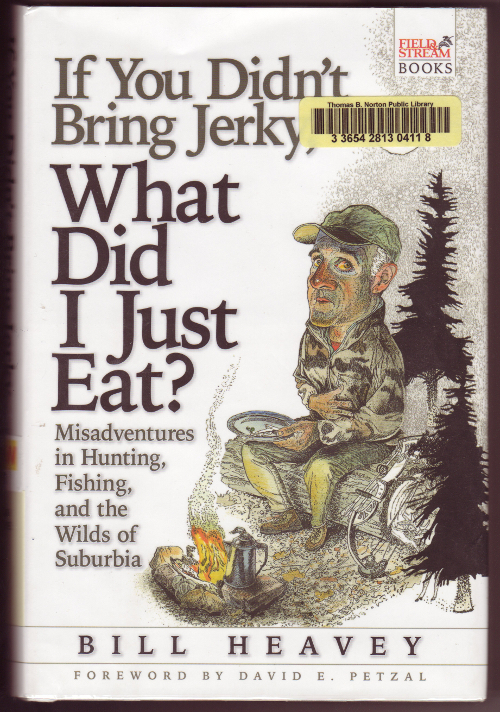
Anyone passingly familiar with hook-and-bullet literature has read the first-hand account of a peerless sportsman who has performed some amazing feat of outdoor prowess. Perhaps he hiked alone into Montana’s Bitterroot Range, lasered a bull elk at 400 yards with a custom rifle based on a wildcat cartridge of his own design, quartered the animal and packed it back to base camp, and then lit a campfire by striking a match on the stubble of his grizzled chin. Or maybe he caught a 1,000-pound marlin from a kayak on a hand-tied fly dangled from an 8-weight rod he built himself. Who are these demi-gods of the outdoors? Not Bill Heavey.
Heavey, an editor at large who writes the humor column for Field & Stream, is more recognizable to us ordinary mortals. As fellow F&S editor David Petzal writes in the foreword, “Bill is an everyman who may be the most inept sportsman ever to grace the magazine’s pages. On the other hand, he may simply be the most honest . . . In short, his boneheaded mistakes are our boneheaded mistakes.”
The quote in “Words of Wisdom” epitomizes Heavey’s writing. Note that he does not expect to see a deer. Note also that like many of us late in the season, he is out there freezing anyway. He begins the same chapter with, “I never expected to say this, but here goes: I’m glad the season is almost over.” This combination of enthusiasm and fatalism is the essence of why we do it. We are disappointed when we don’t succeed, but not overly much, because we really didn’t expect this time to be any different than the last. But next time, just maybe, next time . . .
Heavey’s misery is not confined to hunting season. Of fishing, he writes, “Did you ever have one of those days on the water when you happened to be in exactly the right place at exactly the right time and caught fish until you were sick of it? Me neither.” Instead of a demi-god, we find in Heavey an actual human being. We find ourselves, which is what we really seek in all literature if you believe certain critical analysis. “Like many ineffectual people, I am addicted to the transitory endorphin buzz that comes from impressing somebody besides my own mother.” Folks, that’s me, that’s probably you, and that’s certainly armchair.
Should you wonder for a moment whether Heavey has the true humor writer’s faculty of gently ripping your guts out with a serious tale, read the shattering “Lilyfish,” an account of the passing of his baby daughter. If weeping openly before others bothers you, maybe save this one for a private moment.
In short, Field & Stream continues its tradition of disgustingly good writing and Heavey makes his own mark on a publication that’s been around longer than all of us have been alive. That in itself is no mean feat, Mr. Heavey. Your mother and the rest of us are impressed.
Tags: Book Reviews
